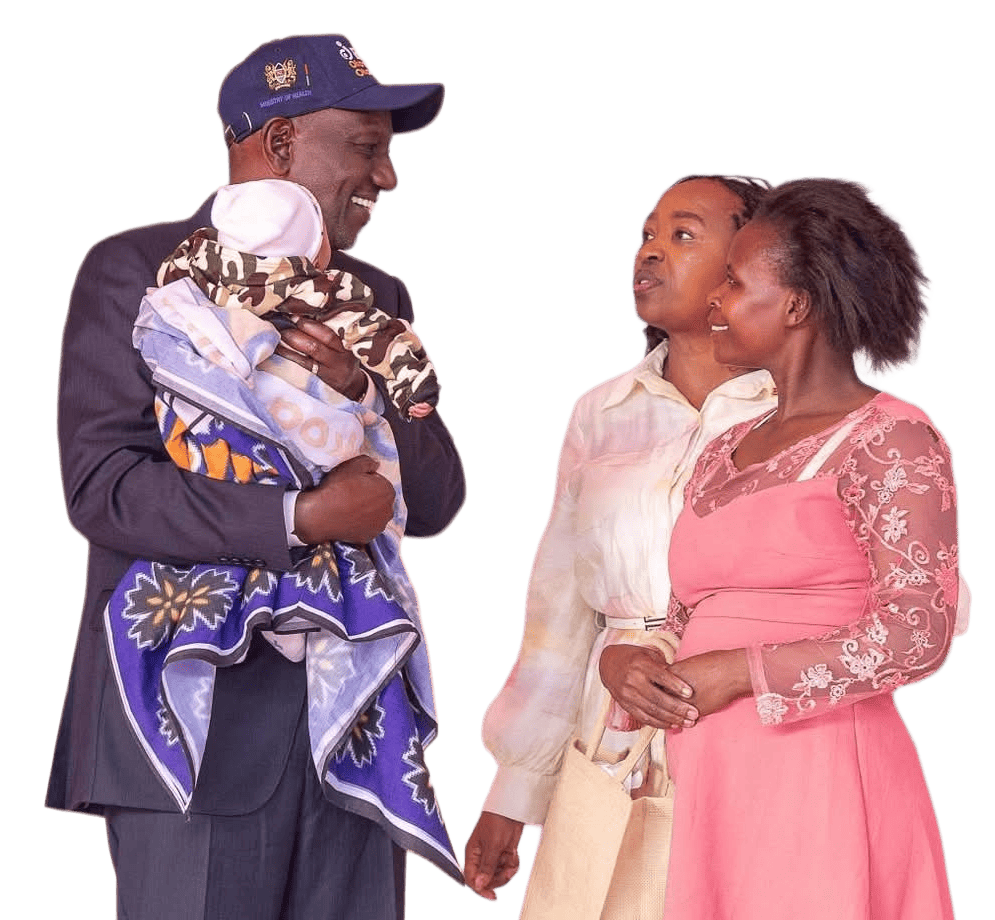
• 28 May 2026: the President launched the Kenya EWENE Acceleration Plan 2026–2028 and the 6-month Rapid Results Initiative
  • Emergency hotline: 0800 722 023 — Free, 24/7
  • Rapid Results Initiative: 28 May – 28 November 2026, with extra support for 26 high-burden counties
  • RRI target: 15% fewer maternal deaths, newborn deaths and stillbirths in health facilities in the 26 counties
  • KES 5 billion a year for SHA cover for mothers who cannot afford it
  • 900 health workers to be trained in emergency obstetric and newborn care across the 26 RRI counties
  • 1.5 million doses of heat-stable carbetocin to be procured to prevent heavy bleeding after birth
  • Half of maternal deaths involve danger signs not recognised in time — know the signs
  • 2028 goal: maternal deaths down from 355 to 140 or fewer per 100,000 live births
Presidential Initiative · 2026–2028

Kenya's National Commitment

Okoa Mama.
Okoa Mtoto.
Campaign.

Every Woman Every Newborn Everywhere (EWENE) is a global initiative adopted by Kenya, led by the Ministry of Health and partners, to accelerate the reduction of maternal and newborn deaths.
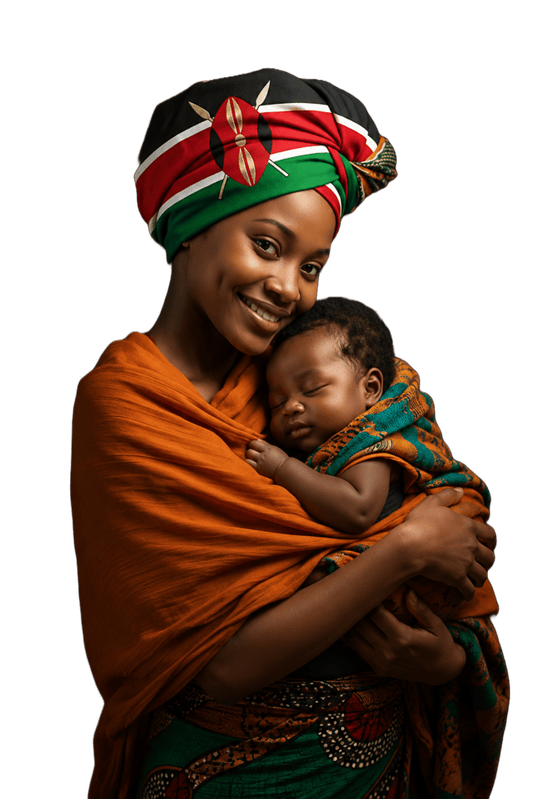
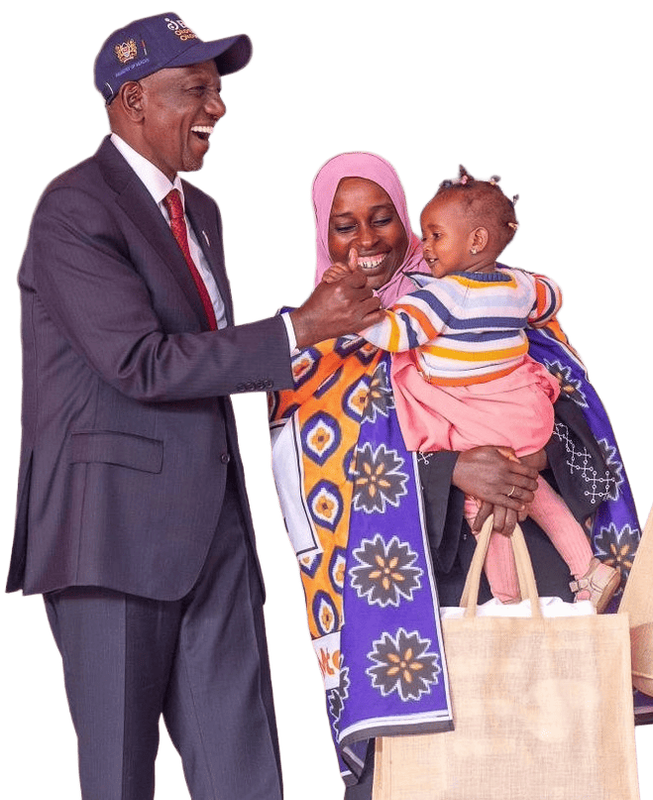
Kenyan mother gently holding her newborn baby, symbolising the Okoa Mama Okoa Mtoto campaign
Every Woman · Every Newborn · Everywhere
Scroll
New

The EWENE Acceleration Plan 2026–2028 and the Rapid Results Initiative plan are now available.

Danger signs

If you see any of these signs, get help now

Don’t wait to see if it gets better. Go to a health facility straight away or call the hotline.

  • During pregnancy

    • Bleeding from the vagina
    • Severe headache, blurred vision or seeing spots
    • Fits (convulsions)
    • Severe pain in the belly
    • Fever

    + 4 more signs

    Go to a health facility immediately or call the hotline.

    Call 0800 722 023
  • During labour and birth

    • Heavy bleeding
    • Labour lasting more than 12 hours
    • Fits (convulsions)
    • The cord, a hand or a foot comes out first
    • The afterbirth (placenta) has not come out 30 minutes after the baby

    Get skilled help at a health facility now. Do not wait at home.

    Call 0800 722 023
  • After giving birth

    • Heavy bleeding, or bleeding that gets worse
    • Bad-smelling discharge from the vagina
    • Fever or chills
    • Severe headache or blurred vision
    • Fits (convulsions)

    + 2 more signs

    Go back to the facility or call the hotline straight away.

    Call 0800 722 023
  • In your newborn baby

    • Not feeding or not sucking well
    • Fits (convulsions)
    • Fast or difficult breathing
    • Feels very hot, or very cold
    • Yellow skin or eyes, especially the palms and soles

    + 3 more signs

    Take the baby to a health facility immediately.

    Call 0800 722 023

Source: Ministry of Health, Mother & Child Health Handbook. See all danger signs →

15Mothers lost each day

Approximately 5,000 maternal deaths per year from preventable pregnancy-related causes

92Newborns lost per day

NMR of 21 per 1,000 live births — approximately 42,000 neonatal deaths per year

93Stillbirths every day

Approximately 30,400 stillbirths annually — nearly half during labour

President Ruto at EWENE Launch
A promise

A Letter to Every Kenyan

“Every newborn deserves not only the right to survive, but the opportunity to thrive.”
H.E. Dr. William Samoei Ruto, C.G.H.
President of Kenya
The three delays

Why mothers and newborns die

Most of these deaths can be prevented. They happen when time is lost at one of three points — and the most deaths happen after a mother has already reached a health facility.

1st Delay

Deciding to seek care

30%
of maternal deaths

When a family doesn't know that bleeding, a severe headache or a baby who won't feed is an emergency — or doesn't know where to go.

  • 50.5% of maternal deaths and 64.8% of newborn deaths involved danger signs that weren't recognised in time
  • 29.2% of maternal deaths were linked to not knowing what services were available
What's being done

Campaigns on radio, TV, social media and in communities so every family knows the danger signs — aiming to reach at least 5 million households by 2028. Community health promoters, community dialogues and maternity open days.

2nd Delay

Reaching care

25%
of maternal deaths

When the right hospital is far away, transport is hard to find, or no ambulance comes.

  • More than half of facilities (51%) have no functional ambulance
  • Few ambulances are equipped for newborns, and transfers between facilities are poorly coordinated
What's being done

Ambulances mapped and made functional in every county referral network. A referral coordinator and an emergency operations centre in every county. SHA reimbursement for emergency ambulance response.

Hotline: 0800 722 023
3rd Delay

Receiving good care

45%
of maternal deaths

When a mother reaches a facility, but the skilled staff, medicines, blood or equipment she needs aren't there.

  • Only 37% of facilities offering delivery services provide all basic emergency obstetric and newborn care
  • One in three level 4 and 5 hospitals can't offer caesarean sections or blood transfusions
  • Only 12% of facilities providing maternity care are equipped for newborn care
  • Oxytocin is out of stock in 40% of facilities, and magnesium sulphate in 48%
What's being done

900 health workers trained in emergency obstetric and newborn care, and 500 in comprehensive newborn care, across the 26 RRI counties. 260 skills corners with monthly emergency drills. 1.5 million doses of heat-stable carbetocin, zero stockouts of life-saving medicines as the goal, and 47,000 units of blood collected every month.

Sources: MPDSR Report 2024 and Kenya Quality of Care Health Facility Assessment 2024 (via the EWENE Policy Brief); Kenya EWENE Acceleration Plan 2026–2028; Rapid Results Initiative.

The 90–90–80–80 targets

Four promises every family can hold us to

Kenya has adopted the global Every Woman Every Newborn Everywhere coverage targets. Here is what each one means, and where Kenya stands today.

  1. 90%

    of pregnant women have at least four antenatal check-ups

    Regular check-ups catch problems like high blood pressure and anaemia early.

    Kenya today: 66%Not yet achieved
  2. 90%

    of births are attended by a skilled health worker

    A trained midwife, nurse or doctor at birth can act fast if something goes wrong.

    Kenya today: 89%Nearly there
  3. 80%

    of mothers get a check-up within two days of giving birth

    Most serious problems after birth, like heavy bleeding and infection, start in the first days.

    Kenya today: 77.6%Nearly there
  4. 80%

    of newborns get a check-up within two days of birth

    The first days are the most dangerous for a baby. The national target is still being set.

    Kenya today: 82.1%Target to be confirmed

Source: Kenya EWENE Acceleration Plan 2026–2028, Kenya EWENE scorecard (June 2025). Read the plan →

2028 Targets

Where we are going

These aren't just numbers on a chart. Each one means more mothers coming home, and more babies growing up.

  • Maternal deaths

    per 100,000 live births

    From 355to ≤140 by 2028

  • Newborn deaths

    per 1,000 live births

    From 21to ≤12 by 2028

  • Stillbirths

    per 1,000 births

    From 19to ≤12 by 2028

  • Births with a skilled attendant

    of all births

    From 89%to 100% by 2028

  • Four or more antenatal visits

    facility data (KHIS)

    From 49%to 75% by 2028

  • Facilities out of oxytocin

    medicine that stops bleeding

    From 40%to 0% by 2028

  • Facilities ready for emergencies

    all 7 basic emergency functions

    From 37%to 80% by 2028

Where Kenya started2028 target Source: Kenya EWENE Acceleration Plan 2026–2028. What do these terms mean?

County progress

Progress where it counts

During the Rapid Results Initiative, every county's progress is tracked weekly. Verified highlights appear here.

  • County nameVerified progress figure

    Placeholder: e.g. change in facility readiness or stock availability since the RRI began.

    Reporting period
  • County nameVerified progress figure

    Placeholder: e.g. health workers trained in emergency obstetric and newborn care.

    Reporting period
  • County nameVerified progress figure

    Placeholder: e.g. maternal and perinatal death reviews completed on time.

    Reporting period

You Are Part of This Movement

Learn the danger signs. Share them. Demand accountability. Together, we end this.

Home

Priority Actions This Month

EWENE coordinates counties, communities, and facilities to remove delays in maternal and newborn care.

26 priority counties running rapid results cyclesSee the Plan